Understanding the traditional tools and methods of Native American weaving offers more than just historical context; it provides a framework for appreciating the intricate artistry, cultural significance, and practical challenges faced by weavers for centuries. For collectors, artists, or those seeking to understand the provenance and value of handwoven textiles, recognizing the specific looms and techniques employed is fundamental. This insight allows for a more informed assessment of authenticity, skill, and regional variations, moving beyond surface aesthetics to the underlying craft.
The Foundational Looms
Native American weaving traditions utilize several distinct loom types, each suited for particular textiles and reflecting regional innovations. These are not merely devices but extensions of cultural practice.
Upright Looms: The Navajo Tradition
The upright loom, most famously associated with Navajo (Diné) weaving, is a robust, vertical structure designed for creating large, durable textiles such as rugs, blankets, and tapestries. Its construction typically involves two strong upright poles and two crossbeams, forming a rectangular frame. The warp threads are strung vertically between the crossbeams, creating a continuous loop. Tension is maintained through various methods, including lashing the warp to the beams and using tension cords or spring mechanisms, ensuring a tight, even surface essential for compact, long-lasting weaves.
- Structure: Vertical frame, often free-standing or leaning against a support.
- Warping: Continuous warp, often using a "lazy H" or figure-eight method around the beams.
- Tension: Achieved through lashing, spring rods, or weighted bottom beams.
- Output: Known for dense, durable textiles like Navajo rugs, characterized by intricate geometric patterns and a tight weave that holds its shape.
- Cultural Significance: Central to Navajo economic and spiritual life, with designs often reflecting cultural narratives and the natural world.
Backstrap Looms: Portability and Precision
The backstrap loom is a highly portable and ancient tool, prevalent among various Indigenous groups across the Americas, including some Pueblo peoples and Mesoamerican cultures. This loom consists of a few simple bars: a warp beam attached to a fixed point (like a tree or post) and a cloth beam connected to a backstrap worn by the weaver. The weaver's body controls the warp tension, leaning back to tighten the threads. This direct, tactile connection allows for fine control over the weave, making it ideal for narrower, highly detailed pieces.
Best for: Creating belts, sashes, bands, and smaller, finely patterned textiles where precise tension control is paramount.
Frame Looms: Simplicity and Adaptability
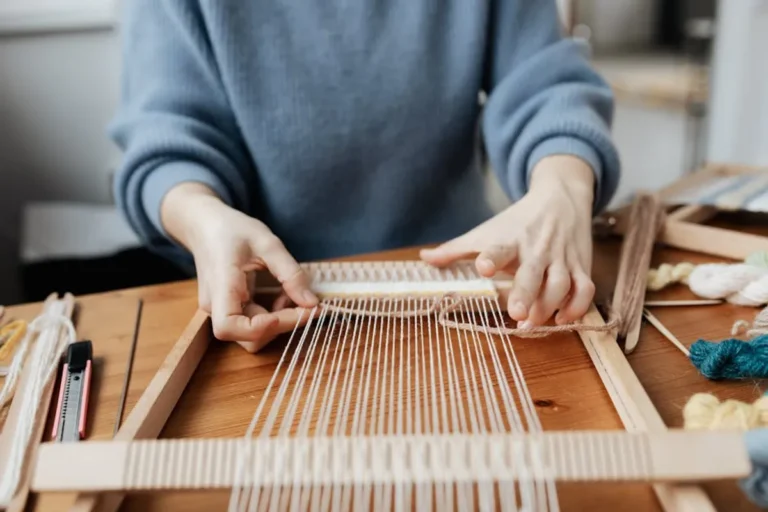
Frame looms, while less complex than upright or backstrap looms, serve a valuable purpose for smaller projects, educational weaving, or specific regional styles. These are essentially rigid frames, often rectangular, where warp threads are strung from one end to the other. Tension is fixed by the frame itself, making them straightforward to set up and use. Some Indigenous groups adapted simple frame structures for specific purposes, though they lack the tension control and capacity for large textiles found in more specialized looms.
Utility: Often used for teaching, experimental weaving, or creating small decorative pieces and samplers.
Essential Weaving Techniques
Beyond the looms, the techniques employed define the character and complexity of Native American textiles. Mastery of these methods transforms fiber into art.
Plain Weave and Tapestry Weave
The most fundamental technique is the plain weave, where the weft thread passes alternately over one warp thread and under the next. While simple, its variations form the basis for many textiles. Tapestry weave, a specialized form of plain weave, is particularly prominent in Navajo rug weaving. Here, the weft threads do not travel from selvage to selvage but turn back within the warp at color changes, creating distinct color blocks and allowing for intricate pictorial and geometric designs. The skill lies in managing the joins between colors, whether by interlocking wefts for a strong bond or dovetailing for a softer transition.
Key characteristic: Weft-faced, meaning the weft threads completely cover the warp, allowing for rich color fields and detailed imagery.
Twining and Finger Weaving
Twining involves two weft threads twisted around each other as they enclose each warp thread. This technique creates a very strong, dense, and often textured fabric, commonly found in basketry but also in some textile traditions, particularly for making bags, mats, or sturdy garments. Finger weaving, conversely, is a loomless technique where warp threads are manipulated by hand to create patterns, often diagonal or chevron. It is used for sashes, belts, and straps, producing a robust, braid-like textile without the need for a mechanical shedding device.
Pro Tip: When evaluating a handwoven Native American textile, pay close attention to the selvages (finished edges). Even, tight selvages, especially on upright loom pieces, indicate a high level of skill and careful tension management throughout the weaving process. Uneven or loose selvages can suggest less experienced craftsmanship or issues during weaving.
Auxiliary Tools and Material Preparation
The process of weaving extends beyond the loom and primary techniques, encompassing the preparation of fibers and the use of smaller, specialized tools.
Fiber Preparation and Dyeing
Before weaving can begin, raw fibers—most commonly wool from churro sheep for Navajo weavers, or plant fibers like cotton, yucca, or dogbane in other traditions—must be cleaned, carded (or combed), and spun into yarn. Hand spindles, often simple wooden shafts with a whorl, are used for this process, imparting twist and strength to the fibers. Natural dyes, derived from plants, minerals, and insects, were historically used to create a rich palette of colors, with specific dye recipes and mordants passed down through generations. The quality of the spun yarn and the vibrancy of natural dyes significantly impact the final textile's appearance and longevity.
Weaving Implements
Several small tools assist the weaver in managing the warp and weft:
- Battens/Shed Sticks: Flat, smooth pieces of wood inserted into the warp to create a "shed" (opening) through which the weft passes. Rotating a batten on its edge opens a wider shed.
- Weft Forks/Combs: Tools with teeth or tines used to beat down the weft threads, compacting them against the previous rows to create a tight, dense fabric.
- Spindles/Bobbins: Small sticks or tubes around which weft yarn is wound, allowing it to be passed through the shed easily.
- Heddle Rods: Used to create a second shed, often in conjunction with a shed stick, by lifting specific warp threads.
Appreciating the Craft
Understanding the specific looms and techniques employed in Native American weaving offers a deeper appreciation for the textiles themselves. It highlights the ingenuity in tool design, the immense skill required for precise execution, and the cultural narratives embedded within each piece. For those looking to collect, support Indigenous artists, or even embark on their own weaving journey, this knowledge provides a foundation for informed engagement with a rich and enduring art form. It underscores that these textiles are not merely decorative items, but tangible records of tradition, labor, and artistic expression.
Frequently Asked Questions
What is the primary loom used in Navajo rug weaving?
The primary loom used in Navajo rug weaving is the upright loom, a vertical frame structure that allows for the creation of large, durable, and tightly woven textiles such as rugs and blankets.
What distinguishes tapestry weave in Native American textiles?
Tapestry weave is distinguished by its weft-faced nature, where weft threads entirely cover the warp, and by the practice of turning weft threads back within the warp at color changes, allowing for intricate color blocks and detailed patterns.
Can Native American weaving techniques be learned without specialized traditional tools?
While traditional tools are ideal for authentic replication, basic principles of plain weave and even some tapestry techniques can be explored on simpler frame looms or even improvised setups. However, mastering specific cultural techniques like backstrap weaving often benefits significantly from using the traditional loom type.
How can one ethically acquire Native American weaving tools or textiles?
Ethical acquisition involves purchasing directly from Indigenous artists, reputable galleries, or cultural organizations that ensure fair compensation and cultural respect. Researching the artist, their affiliation, and the provenance of the piece helps support authentic cultural practices.