The Wheelwright Museum of the American Indian, founded in 1937 in Santa Fe, holds one of the most carefully provenanced private collections of Diné and Pueblo material in the United States. It is small enough to be walked thoroughly in an afternoon and serious enough to reward repeat visits. A short report on a recent study visit, with notes on how to plan one of your own.
What is currently on view
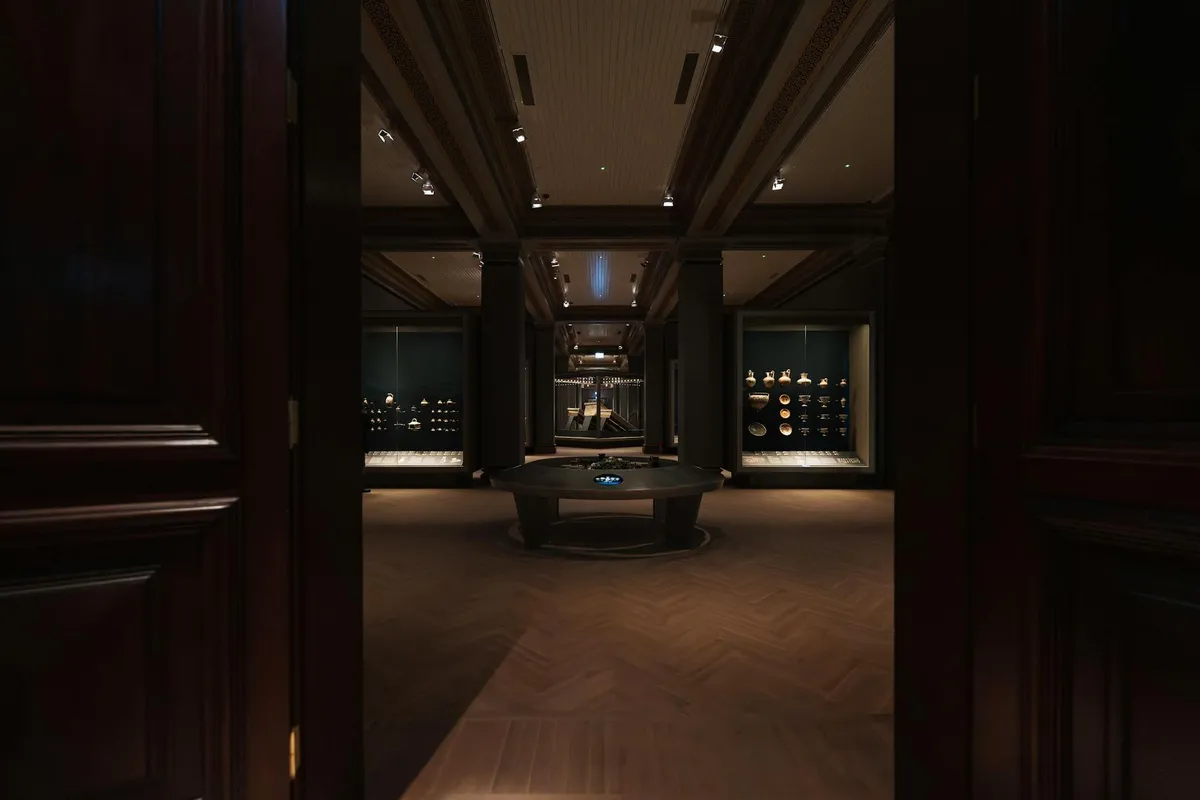
The permanent installation centres on Diné weaving and pottery from the late nineteenth through mid-twentieth century, with rotating exhibitions of contemporary work. At the time of writing, the temporary gallery housed a small show of Hopi katsina dolls from the museum's study collection, with object labels written in consultation with Hopi cultural advisors — a model of how attribution and cultural context can be presented honestly.
The Case Trading Post in the basement
The reconstructed trading-post space in the museum's lower level is partly a gift shop and partly a study aid: it lets visitors handle contemporary pieces, see how they are priced and described, and understand the still-active marketplace these traditions live within. It is also where staff are often most willing to talk informally about specific makers and pieces.
How to request a storage visit
For serious researchers and credentialed students, the museum's study collection is available by appointment. A request letter explaining your research interest, a CV, and an honest assessment of what you want to see is sent to the curatorial staff several weeks in advance. The visits are supervised, photography is restricted, and notes are taken on archival paper supplied by the museum. The standard is high but reasonable, and the access is genuine.
What to bring
A 10x loupe, a small notebook with archival-paper pages, a soft pencil (no pens in the galleries or storage), and a willingness to spend twenty minutes on a single object. The most common mistake visitors make is trying to see everything; the second is taking too many photographs and too few notes. A study visit is for looking, not for documentation. The documentation already exists, in the museum's files, and is the next phase of the work — not the first.
A note on respect
Some of the material in any museum of Indigenous art carries restrictions on viewing, photographing, or even publicly discussing certain pieces, in consultation with the originating communities. The Wheelwright is unusually transparent about which pieces fall into this category and why. If staff tell you a piece is not on view for cultural reasons, that is the end of the conversation. Curiosity is not a stronger claim than the maker community's judgement about what should be seen.