
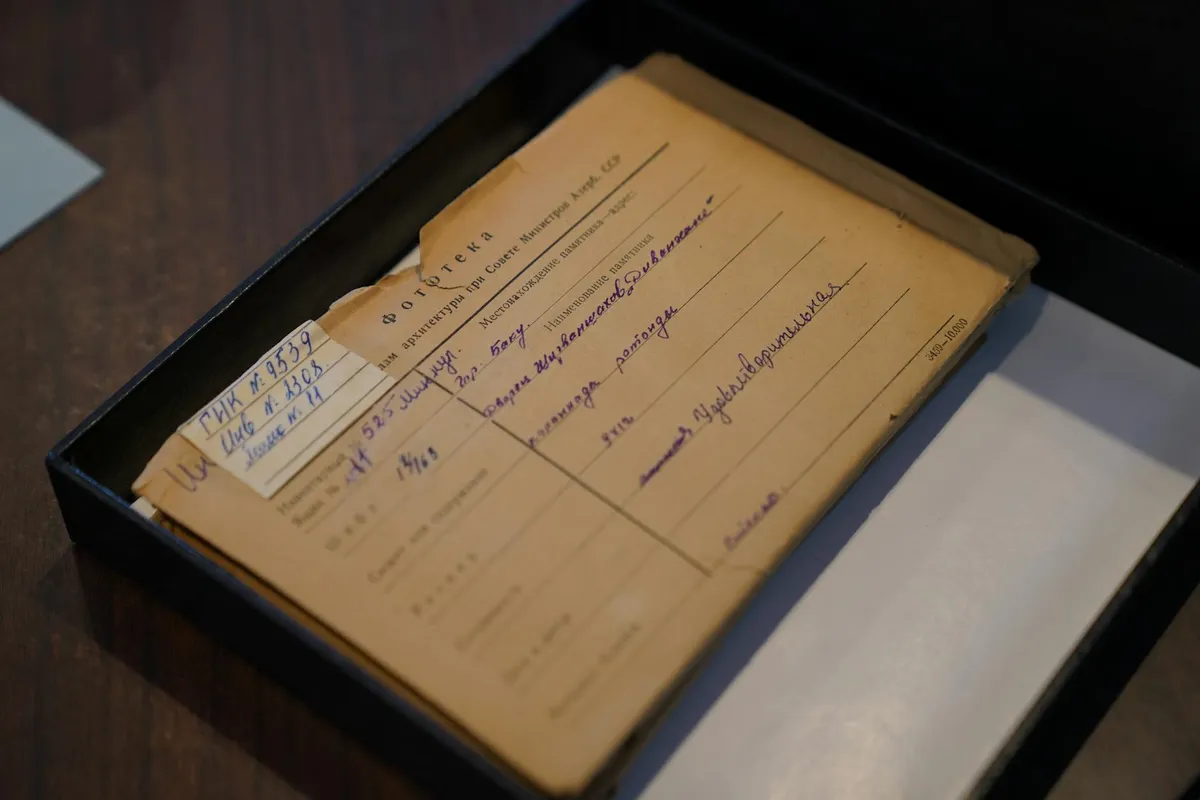
Before you trust anything else about an older Native American object, look at what is glued, taped, or written on the back. The labels are the object's passport. They tell you which collections it has passed through, who attributed it, and how confidently those attributions were made. A piece with three generations of clear collection labels is a different kind of object than one with no paper trail at all — even if the two pieces look identical at first glance.
The accession-number format usually dates the label
Museum and major-collection accession numbers follow predictable patterns by era. A label reading "1923.14.7" is almost certainly from a Boasian-era anthropology museum, where the first number is the year of accession, the second the lot, and the third the object within the lot. A label reading "NA-447" with no year is more likely from a private collection that did not date its acquisitions. Knowing the format lets you cross-reference against published collection records — and lets you spot relabelled objects that have been given a "vintage" look to inflate their apparent history.
Handwriting and ink tell you the era as much as the paper does
Brown iron-gall ink and copperplate handwriting on a thick rag-paper label is consistent with pre-1900 collection. Blue ballpoint on a typewriter-perforated label is consistent with mid-century. Sharpie on a plain white sticker is recent. None of this is dispositive on its own, but a label whose materials are wildly inconsistent with its claimed date is worth a second look.
The most informative label is sometimes the one that was removed
Look for adhesive residue, paper ghosts, or the rectangular outline where a label used to be. The fact that someone removed a label is information. Sometimes it was conservation work; sometimes it was an attempt to obscure a previous attribution. The conservator's standard is that labels are never removed — they are documented, photographed, and, when truly necessary, lifted and archived separately. A clean rectangle of slightly darker patina is evidence that someone did not follow that standard.
What to do when there are no labels at all
Absence of paper does not mean the object is unprovenanced — it means the provenance has to be reconstructed from other evidence: family records, photographs of the piece in earlier displays, dealer catalogues. A piece sold by a major Southwest dealer in 1960 may be unillustrated but may appear in their stock-book, which is often archived. Provenance research is the slow, library-bound part of this field; the labels just give you the shortest route in.