Understanding Makah baskets requires specific knowledge of their unique construction, cultural context, and historical trajectory. This guide provides the necessary framework for discerning authentic pieces, appreciating their craftsmanship, and navigating the market for these significant Northwest Coast artifacts. The objective is to equip collectors, researchers, and enthusiasts with the criteria to identify, evaluate, and responsibly acquire Makah basketry, recognizing its artistic merit and cultural provenance.
Understanding Makah Basketry Traditions
Historical Context and Cultural Significance
Makah basketry originates from the Makah Nation, whose ancestral lands are located on the Olympic Peninsula in Washington State, specifically around Neah Bay. Their proximity to the Pacific Ocean and rich natural resources shaped their material culture, including basket weaving. Makah baskets are not merely utilitarian objects; they are expressions of a deep cultural heritage, often depicting scenes from daily life, spiritual beliefs, and the abundant marine environment, particularly whaling. The tradition has persisted through generations, adapting to external influences while retaining core techniques and aesthetic principles. This continuity underscores their significance as tangible links to Makah history and identity.
Materials and Preparation
The primary materials used in Makah basketry are natural fibers sourced from the local environment, meticulously prepared for weaving. The most common material is cedar bark (Thuja plicata), specifically the inner bark, which is harvested, processed, and split into fine strands. This material provides the structural integrity and characteristic color variations. Complementary materials include bear grass (Xerophyllum tenax) for lighter, decorative elements, and sometimes swamp grass or rye grass for contrast. The preparation process is labor-intensive, involving careful selection, drying, splitting, and sometimes dyeing with natural pigments derived from roots, berries, or minerals. The quality of the raw materials and the rigor of their preparation directly impact the durability, flexibility, and aesthetic finish of the final basket.
Distinguishing Makah Basket Weaving Techniques
Coiling and Twining Methods
Makah basket makers primarily employ two distinct weaving techniques: coiling and twining. Coiling involves sewing together a continuous spiral of foundation material (often cedar bark or grass bundles) with a stitching element, creating a sturdy, often watertight vessel. This technique is frequently used for larger, more robust storage baskets or cooking vessels. Twining, conversely, involves weaving two or more weft elements around a series of rigid warp elements, creating a more flexible and open structure. Makah twined baskets are particularly renowned for their intricate, often pictorial designs. The choice of technique often dictates the basket's form and intended function, with coiled baskets typically being more rigid and twined baskets offering greater flexibility and decorative potential.
Common Patterns and Motifs
Makah baskets are identifiable by their distinctive patterns and motifs, which often reflect their maritime culture and natural surroundings. Pictorial designs are a hallmark, frequently featuring whaling scenes, canoes, human figures, and marine animals like whales, seals, and birds. Geometric patterns, including zigzags, diamonds, and stepped designs, are also prevalent, often used in conjunction with or as borders for pictorial elements. Color contrast, typically achieved through the use of natural dyes or varying shades of cedar bark and bear grass, enhances these designs. The precision and symmetry of these patterns are key indicators of skilled craftsmanship, and their narrative content provides valuable cultural insights. Collectors often seek pieces with well-executed and culturally significant motifs.
Identifying Authentic Makah Baskets
Signature Characteristics
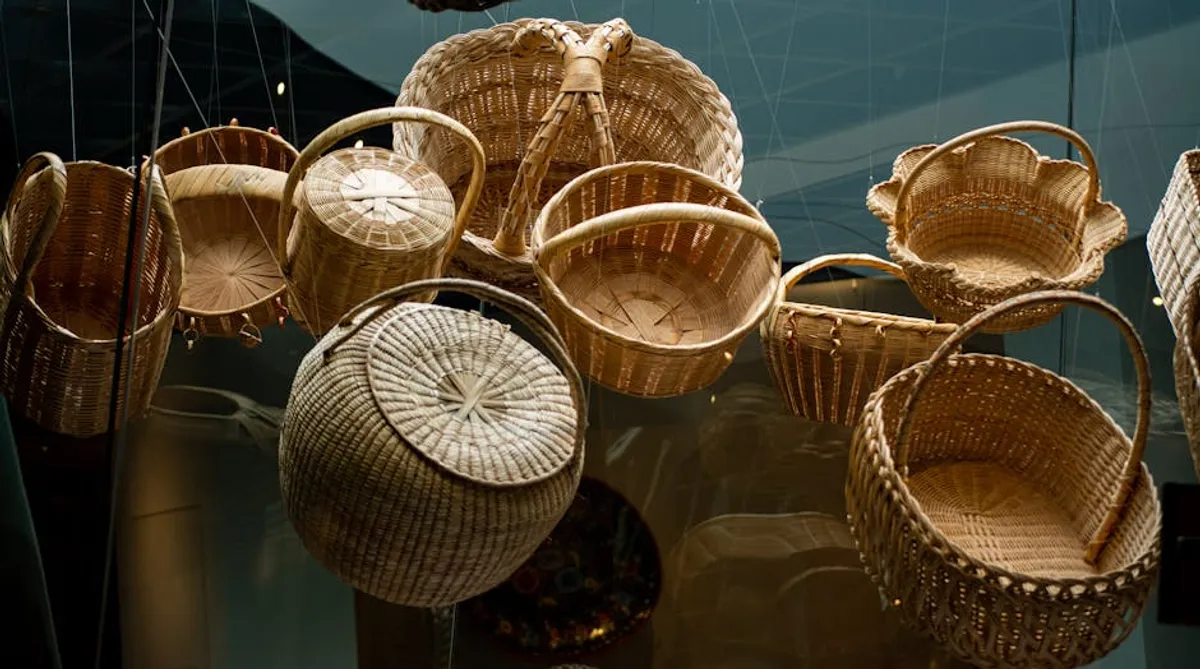
Authentic Makah baskets possess several signature characteristics. These include the meticulous preparation of materials, the consistent tension in the weave, and the precise execution of patterns. Makah twined baskets, especially those made for trade in the late 19th and early 20th centuries, often feature tightly woven, fine strands of cedar bark and bear grass, creating a smooth, almost fabric-like surface. The rim finish is also a critical detail; Makah baskets typically have a reinforced or braided rim that secures the top edge, preventing unraveling. The overall form factor—ranging from traditional lidded storage baskets to more decorative cylindrical or rectangular forms—should align with documented Makah styles. Deviations in material, weave consistency, or structural integrity can indicate non-Makah origin or later repairs.
Condition and Provenance Considerations
When evaluating Makah baskets, condition is paramount. Collectors assess for signs of wear, fading, material loss, or damage from pests or improper storage. A basket in excellent condition, with minimal fading and intact fibers, will command a higher value. However, some wear consistent with age and use is expected and can contribute to its historical narrative. Provenance, the documented history of ownership, is equally crucial. A clear provenance, especially one linking the basket to a specific Makah weaver or family, or a known collection, significantly enhances its authenticity and market value. Documentation such as photographs, acquisition records, or oral histories provides verifiable context, distinguishing genuine artifacts from reproductions or misattributed pieces.
Pro Tip: When examining a Makah basket, pay close attention to the base. Authentic pieces often show a consistent start to the weave, without abrupt changes in material or technique. Irregularities here can sometimes indicate repairs or less experienced craftsmanship. Always handle with clean, gloved hands to prevent oil transfer.
Collecting and Preserving Makah Baskets
Ethical Sourcing and Market Value
Ethical sourcing is a critical consideration for any collector of indigenous art. Acquiring Makah baskets through reputable dealers, established galleries, or directly from Makah artists or their descendants ensures that the transaction supports the community and respects cultural heritage. The market value of Makah baskets varies widely based on age, condition, size, complexity of design, and provenance. Exceptional examples by renowned weavers, or those with significant historical documentation, can reach substantial values. Understanding these factors is essential for making informed acquisition decisions and ensuring fair compensation to creators or their inheritors.
Care and Conservation Practices
Proper care and conservation are essential for preserving Makah baskets for future generations. These practices focus on maintaining the structural integrity and aesthetic quality of the natural fibers:
- Environmental Control: Store baskets in a stable environment with moderate temperature (60-75°F or 15-24°C) and relative humidity (40-60%). Avoid direct sunlight, which can cause fading and fiber degradation.
- Physical Support: Ensure baskets are properly supported to prevent distortion. Avoid stacking heavy objects on them or placing them in positions where they might bear undue weight.
- Dust and Pest Management: Regularly dust baskets gently with a soft brush or a low-suction vacuum with a screen attachment. Inspect periodically for signs of insect activity (e.g., frass, holes).
- Handling: Always handle baskets minimally and with clean hands or cotton gloves to prevent the transfer of oils and dirt. Lift from the base, not by delicate rim features.
- Professional Assessment: For significant damage or deterioration, consult a professional textile or ethnographic conservator. Avoid DIY repairs that could further damage the artifact.
Navigating the Makah Basket Market
For those looking to acquire or sell Makah baskets, engaging with established channels offers the most reliable path. This includes specialized auction houses with expertise in Native American art, reputable ethnographic art galleries, and direct engagement with Makah cultural centers or artists where appropriate. Due diligence is crucial: verify dealer credentials, request detailed condition reports, and prioritize items with comprehensive provenance. Understanding the current market trends, which can fluctuate based on availability, collector interest, and cultural events, will inform pricing expectations and negotiation strategies. Building relationships with knowledgeable experts in the field can also provide invaluable guidance.
Frequently Asked Questions About Makah Baskets
Q: How can I tell if a Makah basket is old?
A: Older Makah baskets often exhibit a patina of age, such as slight fading of natural dyes, minor fiber wear consistent with use, and a generally softer, more pliable feel due to the drying and curing of materials over time. Provenance documentation is the most reliable indicator.
Q: Are modern Makah baskets still made today?
A: Yes, Makah basket weaving is a living tradition. Contemporary Makah artists continue to create baskets, often blending traditional techniques and motifs with modern interpretations. These pieces are highly valued for their artistic merit and cultural continuity.
Q: What is the significance of whaling scenes on Makah baskets?
A: Whaling was historically central to Makah culture, providing sustenance, spiritual connection, and social structure. Depicting whaling scenes on baskets reflects this deep cultural importance, celebrating successful hunts, the bravery of whalers, and the spiritual relationship with marine life.
Q: Where is the best place to see a collection of Makah baskets?
A: The Makah Cultural and Research Center in Neah Bay, Washington, houses an extensive and significant collection of Makah artifacts, including numerous baskets. Other major museums with Native American art collections may also feature Makah basketry.