
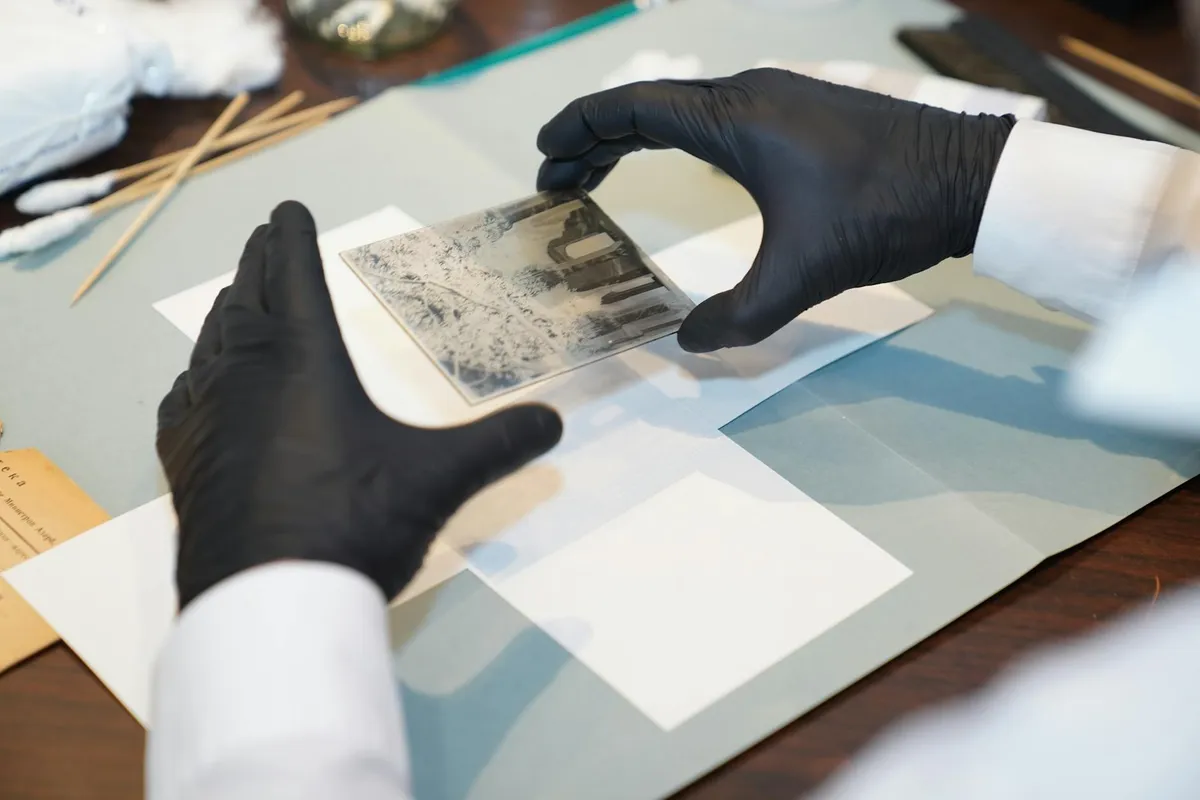
The hardest discipline in conservation is restraint. A piece of nineteenth-century beadwork that has lost a few beads is more honest, more historically informative, and more valuable to scholars than the same piece "completed" by a well-intentioned restorer. The conservator's rule, distilled to one sentence, is: do as little as possible, do nothing that cannot be reversed, and document everything you do.
Cleaning is almost always the wrong first move
The most common harm done to older objects is cleaning. Dust that has settled into the weave of a basket over a century has become part of the object's patina and material record; removing it lightens the colour, smooths the texture, and erases information that could have helped date or attribute the piece. A gentle dry brush to remove loose surface dust is usually the only cleaning that is appropriate without professional supervision. Anything involving water, solvents, or polish is conservator-only work and even then only after thorough documentation.
Reversibility is the rule, not a preference
If a structural repair is genuinely necessary — a broken hide, a cracked wooden frame, a torn textile — the materials used must be reversible. Wheat-starch paste and Japanese tissue rather than PVA glue. Wax-resin rather than epoxy. Stitching with thread that matches the original fibre rather than synthetic. The test is: in fifty years, can a future conservator take this repair out and try something better? If the answer is no, do not do it now.
Documentation is the work, not the paperwork
Every conservator I respect treats documentation as the most important phase of any intervention. Before any work, the object is photographed in raking light, normal light, and ultraviolet. Condition is mapped — every break, every loss, every prior repair. The treatment proposal is written, dated, and signed before anything is touched. After the work, the same documentation is repeated. This is what distinguishes conservation from restoration: the paper trail makes the work transparent and undoable.
The light, humidity, and mounting that protect at home
For a private collector who is not undertaking interventions, the most valuable conservation work is preventive: keep light levels low (below 50 lux for textiles and beadwork, dimmer for dyed materials), keep relative humidity stable (around 45-55%), avoid display in direct sunlight or above heat sources, and mount objects so their own weight is not deforming them. A basket sagging on its own rim over fifty years is being damaged just as surely as one being cleaned with water — slower, but as completely.