
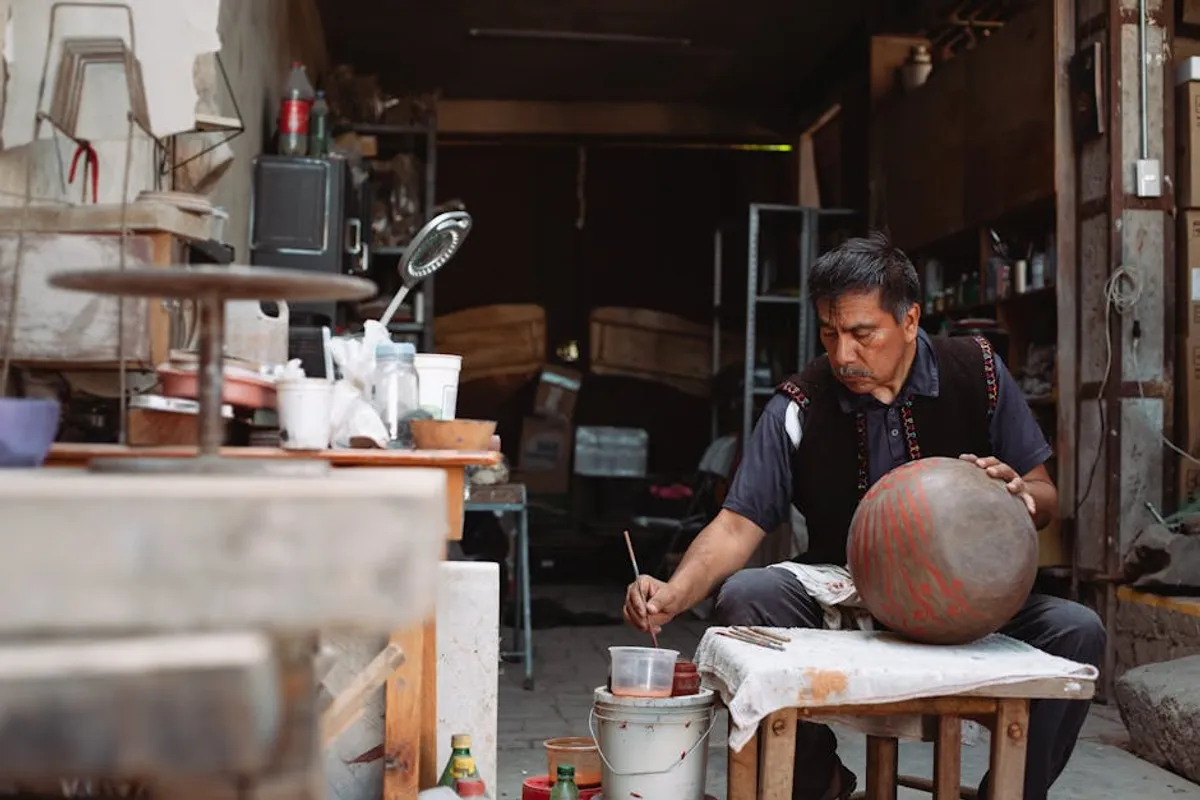
For businesses operating in the art, collectibles, or cultural heritage sectors, understanding the intricate patterns of Acoma pottery extends beyond mere aesthetic appreciation; it represents a critical commercial differentiator. These designs are not arbitrary decoration but a visual language, conveying generations of cultural knowledge, spiritual beliefs, and historical narratives. For an e-commerce platform, a content marketer, or an agency specializing in niche markets, deciphering these meanings allows for accurate product description, targeted audience engagement, and the cultivation of buyer trust through informed representation. This deep understanding translates directly into enhanced SEO visibility for specific search queries, more compelling product narratives, and ultimately, a stronger market position in a competitive landscape.
The Historical and Cultural Foundation of Acoma Design
Acoma pottery, originating from the Acoma Pueblo in New Mexico, is renowned for its thin walls, lightweight construction, and distinctive black-on-white or black-and-orange-on-white polychrome designs. The tradition dates back over a thousand years, with patterns evolving but consistently retaining deep symbolic roots. Early designs often reflected elements of the natural world and ancestral Puebloan art, particularly influences from the Mimbres culture. The meticulous hand-coiling and open-air firing techniques contribute to the pottery's unique character, while the patterns themselves are the primary carriers of meaning.
Understanding the historical context means recognizing that each line, shape, and motif is a deliberate choice, not simply an artistic flourish. This informs how products are categorized and described, differentiating genuine, historically resonant pieces from generic reproductions. For content creators, it provides a rich vein of narrative material, connecting a physical object to a living cultural tradition.
Key Acoma Pattern Categories and Their Symbolism
Acoma pottery patterns can be broadly categorized, each category encompassing motifs with specific, often overlapping, meanings.
Geometric Precision: Lines, Spirals, and Checkerboards
Geometric designs form the backbone of many Acoma patterns, often executed with remarkable precision and symmetry.
- Fine Lines and Hatching: Often used to fill larger shapes or create texture, fine lines can represent rain, water flow, or the pathways of life. Their meticulous application signifies patience and skill. Commercially, highlighting the "fine line detail" in product descriptions appeals to collectors who value craftsmanship and traditional technique.
- Spirals and Meanders: These curvilinear forms frequently symbolize the journey of life, wind, or water. A single spiral might represent a continuous cycle, while interlocking spirals suggest unity or balance. For marketing, connecting a piece with spiral motifs to themes of journey or continuity can resonate with buyers seeking items with deeper philosophical meaning.
- Checkerboards and Rectangular Grids: While seemingly simple, these patterns can denote cornfields, structured community, or the balance between light and shadow. They often appear in conjunction with other motifs, providing a grounded, stable element.
Avian and Animal Motifs: Messengers and Guardians
Birds and other animals are frequently depicted, each carrying specific symbolic weight within Acoma culture. These are highly sought-after motifs and understanding their meaning is crucial for accurate valuation and targeted marketing.
- Parrots (Macaws): Often depicted with elaborate feathers, parrots symbolize prosperity, abundance, and communication, likely due to their exotic nature and vibrant plumage. In a commercial context, a pottery piece featuring a parrot motif can be positioned as a symbol of good fortune or a valuable acquisition.
- Deer and Antelope: These animals represent sustenance, grace, and connection to the land. Their presence on pottery often signifies a prayer for plentiful game or a reverence for nature.
- Lizards and Frogs: Associated with water and fertility, these creatures are often depicted in patterns that also include rain or cloud motifs, emphasizing their role in bringing life-giving moisture.
- Roadrunners: Known for their speed and agility, roadrunners can symbolize protection or good luck.
Nature's Influence: Clouds, Rain, and Lightning
Given the arid environment of the Southwest, water and celestial phenomena hold profound significance, frequently appearing in pottery designs.
- Cloud Terraces: Stepped designs often represent rain clouds, vital for agriculture and survival. These are powerful symbols of fertility and sustenance. Highlighting these motifs in product narratives can appeal to buyers interested in cultural connections to the natural world and survival.
- Rain and Lightning: Zigzag lines often depict lightning, symbolizing power and swiftness, while dotted lines or parallel dashes can represent falling rain, signifying blessing and renewal.
Pro Tip: Ethical Curation and Provenance for Commercial Success
When dealing with Acoma pottery, especially pieces with significant cultural patterns, verifying provenance is not just ethical; it's a commercial imperative. Accurate attribution to a specific artist or family, along with a clear chain of ownership, significantly enhances a piece's value and marketability. Misrepresenting origin or failing to acknowledge the cultural significance can erode trust and damage brand reputation. Always prioritize ethical sourcing and transparent documentation.
Leveraging Pattern Meanings for Commercial Advantage
For SEO professionals and marketers, the detailed understanding of Acoma pottery patterns provides several actionable benefits:
- Enhanced Keyword Strategy: Move beyond generic terms like "Native American pottery." Incorporate specific pattern names and their meanings into content and product descriptions (e.g., "Acoma fertility frog motif," "polychrome parrot prosperity vessel," "cloud terrace rain symbolism pottery"). This targets highly specific, high-intent search queries.
- Compelling Product Storytelling: Instead of merely listing dimensions, craft narratives that explain the cultural significance of the patterns. "This olla, adorned with interlocking spirals, speaks to the continuous journey of life and the interconnectedness of community." Such descriptions elevate a product from a decorative item to a culturally rich artifact.
- Targeted Content Creation: Develop blog posts, articles, or social media content specifically exploring the meaning of Acoma patterns. This establishes authority, attracts an audience interested in cultural education, and drives organic traffic. Examples include "The Symbolism of the Acoma Parrot" or "Decoding Geometric Patterns in Acoma Pottery."
- Authentic Brand Positioning: Demonstrating deep knowledge of the art form's cultural context positions a business as a trustworthy and respectful purveyor of Native American art. This authenticity is a significant draw for discerning collectors and ethically-minded consumers.
Applying Acoma Pattern Knowledge: A Commercial Checklist
To effectively integrate pattern meaning into your commercial strategy, consider these steps:
- Identify the dominant patterns on each Acoma piece in your inventory.
- Research the traditional meanings associated with those specific motifs.
- Draft product descriptions that seamlessly weave in the cultural symbolism.
- Generate long-tail keywords based on pattern names and their meanings.
- Create supplementary educational content (blog posts, videos) explaining pattern significance.
- Ensure all marketing materials reflect cultural respect and accuracy.
- Train sales and customer service teams on pattern meanings to enhance customer interactions.
Strategic Application of Acoma Pattern Insights
The commercial value of understanding Acoma pottery patterns lies in its ability to transform a transaction into an informed cultural exchange. By moving beyond surface-level aesthetics to interpret the deep-seated meanings, businesses can create richer content, develop more precise SEO strategies, and build stronger connections with a discerning audience. This approach not only boosts sales but also fosters a reputation for expertise and ethical engagement within the specialized market of Native American art.
Frequently Asked Questions
What is the primary significance of Acoma pottery patterns?
Acoma pottery patterns are a visual language, conveying cultural beliefs, spiritual meanings, historical narratives, and connections to the natural world, serving as more than mere decoration.
How can understanding these patterns benefit an e-commerce business?
Understanding patterns enables accurate product descriptions, enhances SEO through specific keyword targeting, facilitates compelling content creation, and builds buyer trust by demonstrating cultural knowledge and authenticity.
Are Acoma pottery patterns purely symbolic, or do they have aesthetic functions?
While deeply symbolic, Acoma patterns are also integral to the aesthetic balance and beauty of the pottery. The precision, symmetry, and composition are highly valued artistic elements that contribute to the overall visual impact.
Do specific patterns indicate the age or origin of an Acoma pottery piece?
While patterns can evolve over time and certain families or artists may have signature motifs, dating or authenticating a piece typically requires a combination of factors including clay type, firing technique, form, and provenance, in addition to pattern analysis.